After Barbara’s death, I left Francisco with his uncle, Albertine. He was arrogant, living in a two-story stone house in Aalborg.
“Of course I wasn’t going to leave my nephew to a scatterbrained fool like you; he is my late sister’s legacy to me, may her soul rest in peace,” he had said.
His wife, Flora, was an Arab Jew—a quiet yet ambitious woman. Somehow, all the city’s charity work for the poor passed through her hands. Unlike the people in the Women’s Club who held actual political power and wealth, Flora held that authority largely because Albertine managed those powerful people’s investments. Their young daughter, Susan, had already started studying under a private governess and had learned to read and write. Meanwhile, I had tried to nurture Francisco’s imagination by telling him fairy tales every evening I was home—as if imagination would ever do him any good in the real world!
When I knocked on the door of the house, wearing my old hat and the frayed brown vest Barbara had knitted, I stood in the middle of this upscale neighborhood like a pile of horse manure that women walked past holding their noses. My shoulders slumped, my soul agonizing in an endless, bloody war torn between freedom, virtue, and love, I was now brimming with the hellish torment of parting from my only son, Francisco. With his warm, damp little hand in mine, his angelic face, strawberry-pink lips, and huge sapphire eyes… Beneath his worn-out clothes, in his tiny heart, he carried the weight of his mother’s suicide and his father’s reckless daydreaming, which had escalated to the brink of madness.
One of the servants opened the door. While I waited to be invited in, Flora’s enthusiastic voice rang out in an Arabic accent, asking her maid Mary, “Who is it?” Susan, who had inherited her mother’s large, dark-irised eyes, ran toward her cousin with her hair tied in ribbons on both sides, wearing a brand-new white dress and strapped red shoes.
The maid answered her mistress in a thoroughly formal tone: “Mr. Chao and your little nephew Francisco have arrived together.” The old woman, whose mole between her nose and upper lip I mistook for snot every time I saw her, bowed her head in a mock curtsy and ushered us inside.
Gilded-frame paintings hanging on the walls, heavy chairs upholstered in soft red velvet with gold embroidery, a solid wood table… I knew that even if I recited poetry for the rest of my life, I could never afford the furniture in the foyer of this house. So I resolved to do what I did best: write poetry, fall in love, and make love. I would roll around this world from pillar to post like God’s excrement. The faith and ambition inside me that I might one day take Francisco back vanished like the earthly desires of the serene, supreme saints depicted in those oil paintings. Life was a war I could never win, so what was the point of fighting? The winners, in these stone houses with their beautiful wives and their children dressed in starched, ironed clothes bound to the exact same system, were seizing the losers’ children as spoils of war.
I didn’t have the strength left to stand in that hallway. “I must go,” I said.
Albertine emerged from his study, where he usually sat looking over papers and puffing on his pipe, and sized me up with righteous eyes that implied I was to blame for his sister’s death. I was guilty; I was responsible. If it hadn’t been for the messes I got myself into, Barbara would still be alive. Everything about his demeanor screamed that he didn’t want me there. “So, it’s you?” he asked.
Instead of answering, I knelt down and hugged Francisco. “You’ll stay with your uncle, your aunt, and your cousin for a while, my boy. Don’t you dare embarrass me; I’ll come back for you soon,” I said.
“Embarrass me!”
I had become a complete hypocrite and a scoundrel. While there was virtually zero chance of a child no bigger than my thumb embarrassing me, I had robbed him of his mother and brought shame upon him because of my own depravity. Everyone at the market laughed at me, saying, “Here comes the madman; let’s see what flowery lines he uses to seduce our women today.” Francisco wasn’t old enough to learn or carry that burden.
He wrapped his arms around me, shedding tears onto the frayed brown cardigan his mother had knitted, wiping his snot and drool all over it. It was one of the strongest moments of my life. I didn’t shed a single tear. I wouldn’t let people say that poets are crybabies, that they are weak. Francisco’s tears made the air in the room even heavier, and Flora and Susan started crying too. As I turned my back and walked out the door, no one took a single step to see me off.
On the stairs, as my shoulders heaved with sobs, thoughts of which lover I was geographically closest to were already swarming my brain.
* * *
Tabby Chao pushed off with his hind legs and leaped into the lap of Polina, who had fallen asleep on my shoulder. The water in the kettle was nearly gone. When Polina stepped closer to keep the kettle from burning dry, she noticed the stove had died down. The room had been growing cold for a while. The vapor escaping between Polina’s lips as she slept was as delicate and light as her soul.
“Let me fetch some wood from the shed,” she said with sleepy eyes.
“Stay put, I’ll get it,” I said.
Polina looked troubled by my courtesy. She paused hesitantly, her eyes welling up. “I’ll get it—I’ll grab a fresh bottle too, this one’s empty,” she said, forcing a smile. My attention was distracted when Tabby Chao leaned his back against my leg for support and abruptly started licking his ass.
As Polina walked toward the shed, that flawless back—a gift from the years she had spent practicing ballet—was a work of art one could watch for hours.
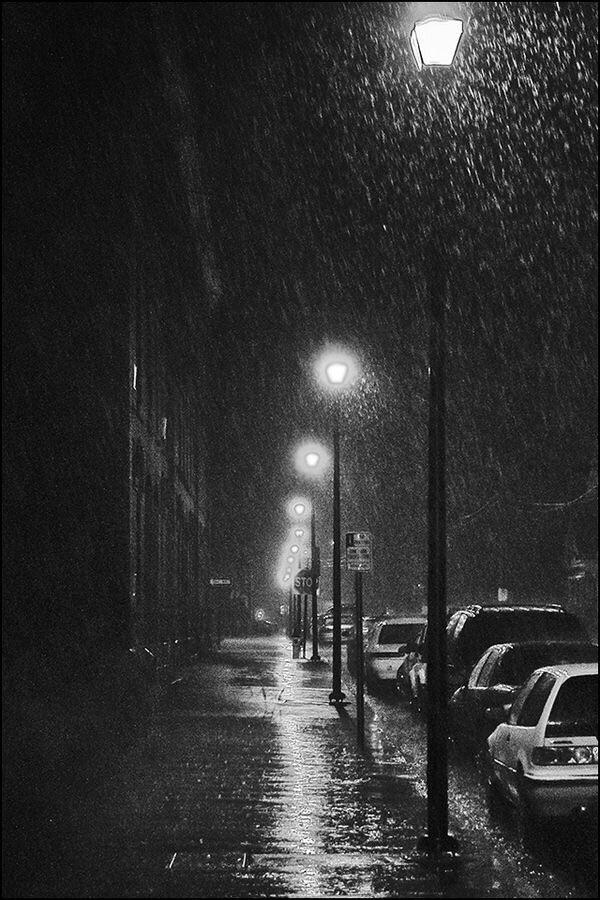
I stood up from beside Tabby Chao and headed into the kitchen. There didn’t seem to be anything to eat. I held my hands out toward the stove; it had gone cold. A flash of lightning lit up the room; the rain kept falling. Suddenly, that day flashed back into my mind. Polina had asked me to fetch firewood from the shed. I had thrown my olive-drab military poncho raincoat, which hung behind the door, over my shoulders and stepped outside.
That was two years ago.
* * *
Marian, Klara, and Sylvia vanished as if the earth had swallowed them whole; their letters stopped abruptly, and the ones I sent came back undelivered. Every single day, I used to write letters to all my lovers, tucking little things inside based on their interests—a flower for one, a bird feather for another, a butterfly for the next, everyday things you could find anywhere—managing to prove my love without actually doing anything at all. Now, however, some of my most important lovers had disappeared, and I had simply lost interest in others.
I paid the rent for my room in Norholm by working as a porter, filled my belly with a quarter-loaf of bread, and wrote exclusively to Kristin now. A few weeks out of the year, she would sneak away to stay with me, and we spent those weeks in boundless freedom. Her fine, silky black hair, her gaze reminiscent of a wildcat’s eyes, her butterfly lips, her long, slender fingers like those of the witch burned at the stake in Aarhus, the pomegranate blossom between her thighs that I buried my face in over and over because I could never get enough of her moans as I kissed it, her jellyfish-translucent white skin, and the scent of the ocean that constantly renewed my love for her… I called her “Water.” I cooked for her, stocked the room with plenty of wine, and we made love until the neighbors banged on their ceilings, stomped on their floors, and pounded on the walls; whenever those angry thuds came, we burst out laughing.
Every Monday, with Master Magnus’s permission, I brought her charred pieces of wood from the bakery where I hauled sacks of flour, and she used the charcoal to draw sketches all over my walls. One day, returning home in shame from a job hauling fish that left me unable to stand my own stench, I found a drawing of the pomegranate blossom between her legs on my wall. Never had a black charcoal sketch looked so vividly pink; I stood before it, trembling, until I came. Joyfully, she wrapped her feather-light arms around my neck and asked, “How is it? Do you like it?” Like it was an understatement—it was the finest gift I had ever received in my life.
The love-demon inside me had quieted down. The love I found with Kristin was difficult, yet peaceful. I looked at no one else, wanted no one but her, and read or showed my writing to her alone. I was Kristin’s poet now, no longer the mocked jester of the marketplaces.
When she wasn’t around, I suffered in a divine solitude, giving myself over to writing, drinking, or weeping.
Never had unhappiness been seen to bring such peace.
One Monday, Master Magnus, wiping his hands on the filthy apron covering his massive belly, called out jokingly, “Aren’t you tired of being alone, you workhorse? Hasn’t it been long enough since your wife died? Isn’t it time to end your divine solitude?” He grinned as he smoothed his thick white mustache with the back of his hand, exposing his missing, yellowed teeth.
While his words sliced my soul into halves and quarters like steel, I drifted into daydreams of how happy the home I’d build with Kristin would be—yet on the other hand, even more than failing to give her the life she deserved, I feared the demon inside me. “What if one day, her too, swinging from a rafter… God forbid, undo it if it’s written!”
* * *
“Aren’t you tired of being silent?” asked Polina, who had lifted the stove lid and was tossing in firewood alongside a piece of pitch-pine kindling she had lit at the tip.
“I didn’t notice you come in; I think the sound of the rain made me doze off,” I said. I reached for the bottle she had brought and poured two fingers of whiskey into each of our glasses, knocking mine back in a single gulp before pouring myself a second.
Polina came over and sat beside me, resting her hand on my knee and stroking my leg. Taking her hands—chilled from the cold shed—between my palms, I warmed them with my breath before kissing her fingertips. As our breathing quickened, a flutter stirred inside us both. Time slowed down. As I gently leaned over her, Tabby Chao jumped from the couch onto the coffee table and sniffed the whiskey glasses.
* * *
The poison Master Magnus had injected into me took hold of my mind and body. As a reliable porter, the local merchants liked me and occasionally slipped me tips. I spent them on small trinkets for Kristin. After a while, I stopped buying gifts and saved up the tips to buy a silver wedding band. Isaac, the Jewish jeweler, crafted a ring tailored just for me. It gleamed like the moon, meant to show everyone the true worth of Kristin’s skillful ring finger.
“No,” she said.
I gave her the ring anyway. She had enrolled in art school; moving in with me and getting married wasn’t the right move for her career. Trying not to hurt my feelings, she said, “Let’s revisit this in the future; if there’s anyone in this world I’d ever marry, it’s you.” Her words warmed me, yet as I waited for an indefinite future, I grew impatient, repeating my proposal every time she visited. She was starting to grow tired of it—tired of my questions, tired of me, tired of this relationship…
Trapped inside that room, doing nothing but drinking and making love, unable to move from one point to another, the monotony was becoming exhausting. Understanding her perspective didn’t mean I could accept the reality I was observing.
* * *
“Why isn’t there anything to eat in the house, Polina?” I asked, as if that were the sort of question one asks after making love with tenderness and care.
“Are you hungry?” she asked with a faint smile, yet genuinely curious.
It was a good question; I wasn’t actually hungry, just looking for something to chew on out of boredom. Tabby Chao yawned.
As thunder rattled the windowpanes, Polina wrapped her bare arm around my body, pretending to be frightened and seeking shelter in me.
* * *
I was among a group of porters hired to haul out old furniture for the school’s renovation. Kristin was walking arm-in-arm with another man across the school courtyard. She didn’t see me. Lost all alone beneath a heavy table, following the janitors’ directions—“to the right” so I went right, “to the left” so I went left, “mind the step” so I stepped up… Seeing Kristin with someone else crushed my heart so thoroughly that there wasn’t even a man left to be crushed beneath this two-hundred-pound table. Being important to someone, being the one and only, was over. As an unfaithful demon, I had driven my wife to her death, cheated on Kristin countless times, and abandoned my child to his uncle supposedly for his own good. What had I ever done to deserve mattering to anyone, when my whole life was spent trying to believe my own lies and convincing everyone around me of them?
Everything was as it should be. Almighty God was certainly greater than a love-demon and would mete out His circuitous justice. I resigned myself to sharing Kristin and never asked her a thing. She began to notice my old passion fading. When we made love, I did it as if taking revenge—hurting her, leaving small purple bruises on her skin, wanting her to have to invent lies to explain them when she went to her other lover. She, on the other hand, sensed something had broken between us, yet never brought it up. Perhaps she knew that I knew, and simply didn’t want to confront it.
As my persistence faded, her visits grew sparse; I had long since given up on proposing. Over time, Kristin and I only exchanged letters—the fire in our words flared up occasionally, though mostly they just kept things on life support.
The letters stopped. I stopped writing, too. We became two strangers in the same city. I threw myself into hauling loads; there was no need to turn tips into gifts anymore. A mule is a mule anywhere; its sole purpose in this world is to carry weight. If it won’t carry weight, it has no right to sun, water, or bread. I started saving my tips to send gifts to Francisco. He must have been eight years old by now. Some of his baby teeth must have fallen out, and new ones grown in. Perhaps he wasn’t writing to me because he wasn’t quite old enough yet, or maybe he was angry, or maybe he was writing and the letters simply never reached me. Who knows? Even if I wasn’t a proper father to Francisco, he was my angel, and he always would be.
Some nights, I felt the absence of Kristin, Marian, Klara, Sylvia, Barbara, and whoever else crossed my mind at that moment, aching for their warmth. I couldn’t stop asking myself, “Where is everyone?”—and after a while, growing bored, I would masturbate to the giant pomegranate blossom between the thighs drawn on the wall, picturing no one in particular, and go to sleep.
About a year later, a letter arrived. It was from Kristin, asking permission to visit me. I hurriedly slipped an acceptance note into an envelope and mailed it off. When she arrived, a black veil hanging from her wide-brimmed hat covered her face. Kristin wasn’t the type of woman to hide her beauty. I hoped that perhaps her husband had died, that she was in mourning, and that once her mourning ended, she might marry me. That wasn’t the truth. Kristin had taken a severe beating for cheating on her husband; her face and eyes were black and blue. She had gone to her other lover, who, terrified of her husband, had thrown her out onto the street. There was only one door left for her to take refuge behind: me, a nobody. Nobody suspects a nobody—it was the perfect place to hide. A little wine calmed her down, and before long, she began to smile. Her soul surged and rolled just like the ocean, yet in this tranquil state, I could have watched her for years without blinking. I asked no questions; as she grew comfortable, she told me everything. When she slipped into my bed, I told her that the beating she’d taken clearly hadn’t knocked any sense into her. She gave a bitter laugh. “I shouldn’t have left you,” she said. When I woke up in the morning, she was gone.
* * *
Thunder rumbled, Polina and Tabby Chao were asleep, rain lashed against the window, and the wind blowing through the cracks stirred the curtains. I lit a cigarette and began watching the gray smoke curling from my mouth disperse to the song of the stove’s flames, the rain, and the breathing of Polina and Tabby Chao.
* * *
A few days later, there was a letter from Albertine in my mailbox: he wrote telling me to forget Francisco, that the boy had already forgotten me, and that my letters and gifts were never passed on to him. I had no rebellion left in me to fight a letter reminding me I was a loser. Accepting my fate, I thought, “At least he’s safe.”
There was a knock at my door; it was Jonas. Another mule in his twenties I hauled loads with, another loser. The difference between him and me was that he was happy. He ran cheerfully toward every new hauling job, constantly spinning tall tales while we worked, making us all laugh. Who knows what dreams and games filled his childhood, yet now he, too, stood at my door with greasy hair and filthy clothes to announce our next gig: “Chao, we’re in luck today—we’re playing vultures.”
Playing vultures meant clearing out the house of someone who had died. Sometimes, no one cared if we pocketed small, valuable trinkets we found along the way. Who knew who had died this time; I just hoped their drawers held enough silver and gold to fit in our pockets.
I threw on my jacket, stuffed my shirt—which hadn’t seen water in days—into my trousers, and we set off. Walking down the road making small talk, we had nothing better to do than try to ignore the growling of our stomachs, which felt glued to our spines.
The address was familiar. We stopped in front of a fairly large two-story house. I couldn’t explain the gnawing dread sinking into my gut. The other porters had already started carrying out the heavy furniture. Frank, leaning against the garden wall taking a breather with a cigarette, wiped a massive glob of snot from his nose onto his trousers before spotting me and grinning.
“Who died?” I asked without even saying hello.
“Some painter woman,” he said bluntly. “Her husband had her followed; turns out she had a lover somewhere around your parts, and when the guy found out, he strangled her.”
As Frank told the story, sweat poured from every pore of my body; burning with the urge to vomit and weep, I clung to one last shred of hope.
As Frank went on—”They threw the guy in prison, and the Crown seized his belongings and the house”—I cut him off and asked for the woman’s name.
He pulled a scrap of paper from his sagging coat pocket, held it close to his squinting, wrinkled eyes, and struggled to decipher the handwriting: “Kristin Jacobsen.”
Facing Frank’s blank stare and drooping lower lip, the words slipped from my lips: “Water drowned.”
Without even going inside the house, I turned back and began walking the exact road Jonas and I had just taken. Though Frank shouted after me to stop, I heard nothing save a deafening roar in my ears. On the way, I stopped by Stevensen’s hardware shop, took two meters of rope, and had him put it on my tab. He didn’t hesitate; I hauled his goods anyway, so he’d just deduct it from my pay sooner or later.
I tied a noose at the end of the rope and fastened it to the ceiling beam. I climbed onto a chair and slipped the loop around my neck. I was staring straight at the pomegranate blossom on the wall. I kicked the chair out from under me and heard my neck snap.
* * *
“And then I came to you, Polina,” I said.
Polina’s bare chest resting against mine, her hair scattered across her lovely face and shoulders, deep in the sweetest part of her sleep…

