Munching on my toasted bread, my mind remains indifferent to the national agenda, occupied only with a few news items I skim through just to not fall entirely out of the loop. Eight-thirty. I need to get ready and leave the house. Downing my coffee, which has grown stone-cold from waiting in the cup, I head back to my room to change. My cat, Ocir, watches me get dressed with unnecessary curiosity from under the sheet he lifted and crawled beneath, as a cool breeze blowing from the Ayma Mountains billows the room’s curtain. If there are curious neighbors hiding behind their window panes, they might have just caught a magnificent opportunity to spot me stark naked and weave it into local gossip when the time comes.
“My, my, a grown man covered in writings and pictures all over.”
“Oh, is that the point, Mrs. Gevez? The man’s got windows wide open, broadcasting live to the entire neighborhood!”
After checking Ocir’s water and food bowls out of the corner of my eye, I top up his water before leaving the house. Unable to stomach the noise of the city, I put on my headphones and turn on the playlist I haven’t changed in five years.
I turn toward Çatlakkapı to get from Ninth Avenue to Palm Avenue. The smell of sautéed onions already drifts from the apartments into the street, where lunch or dinner preparations are underway. A prostitute I frequently encounter steps out of the Nogal Hotel, dressed in an outfit hardly suitable for a morning, onto Çatlakkapı’s slate-paved street—a thoroughfare with the distinct potential to induce various orthopedic issues upon walking. She shields her eyes with long-fingered white hands against the searing autumn sun that burns her dilated pupils, swollen from drugs or alcohol.
I’ve always thought long-fingered women must be either pianists or painters. It’s nothing more than an observation based mostly on ex-girlfriends who were talented in painting. If she has long fingers, she’s a painter; if she’s a painter, she’s fragile; if she’s fragile, she’s easily manipulated; and if she’s easily manipulated, she can be with me. Women talented in music, however, I prefer to stay clear of. Since they are the geniuses of art, the high degree of rationality they possess saves female musicians from becoming easy prey for me. Ah, notes…
When I turn onto Palm Avenue, Nancy Sinatra, trapped in my headphones, was singing Bang Bang. On the sidewalk opposite, I see the woman with her frizzy hair tied in a ponytail riding her bicycle in a thoroughly clumsy manner—just as I have almost every single day for years. Nearly every face heading to work is familiar. Workers, employers, the unemployed, homeless people sleeping on benches they haven’t left since morning, cats waiting outside shopfronts, dogs looking like politicians on the verge of bursting from overfeeding…
Barking heard from further down the street signals the arrival of a new dog on Palm Avenue. The regulars don’t care for newcomers; despite their bulging bellies, they are unwilling to share their food or territory, so a loud, bark-filled commotion leaks into my ears, trampling over Nancy’s lovely voice. I finally see with my own eyes that the action is right on the opposite pavement, just as I suspected. The homeless waking up annoyed by the barking, prostitutes hungover in their flashy attire, the bourgeoisie, and the lumpenproletariat all take notice and begin to watch the scene. A moment later, the neighborhood’s newest dog flees barking past the woman on the opposite sidewalk, causing her bicycle to lose balance. Panicking, the woman completely loses control due to the pack chasing the stray dog and crashes, striking her head against the parapet marking the boundary between the sidewalk and the café behind it.
Bang Bang, he shot me down
Bang Bang, I hit the ground
Bang Bang, that awful sound
We could see her twitching on the ground. Crossing from our side, we all watch out for the occasional car passing through. Blood pooling beneath her frizzy hair… Her pockmarked, freshly plowed field of a flat face, twitching in pain. I check my watch; time is short, I must get to work. While the gaunt working woman I see every morning dials for an ambulance, a few people nearby film the woman lying on the ground. One of the dogs stands with its paws rested on the saddle of the overturned bicycle, taking in the scene.
I left the scene; the sky was clouding over. Though I prefer autumn—which turns meteorologists’ predictions into trash—over summer, it remains a thoroughly erratic and pointless season compared to the stable cold of winter.
I opened up the workplace, and while dealing with my quotes and orders, the boss arrived. We didn’t exchange good mornings, even out of politeness. We both shared a weary aversion built up over long years. I recognized what many married couples feel through the relationship between my boss and me. To preserve our personal status quo, both of us had to keep this institution we loathed up and running. He went to his office, and after a while, the extension phone of Asurya, who hadn’t come to work that day, rang. The boss was calling her. Shortly after, I heard his aluminum-framed door open; he looked toward Asurya’s desk and didn’t see her. He walked over to me.
“Where is Asurya?”
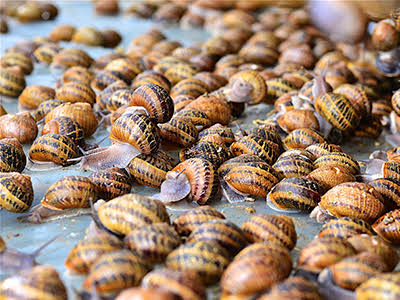
He stands over me, waiting for an answer. I will certainly give him the answer he wants. Social protocol demands it, yet I feel no desire to offer any response. For some reason, I feel as if I will be exhausted by the end of this useless conversation caused by this useless curiosity. Yet much more important things are happening in life; for instance, it has started raining outside. In weather like this, one must pay special attention to snails; their hard shells do not form an armor strong enough to withstand human weight and carelessness. Hence, they lead a fragile life. And when the sun comes out, if they cannot reach moist areas easily, they dry up and die. I don’t know which is worse. For that reason, if there is a next life, it might be worth spending it as a snail.
“She must be at the hospital.”
“What’s wrong with her?”
“She fell off her bike on her way to work this morning and hit her head; she didn’t look too good.”
He flew into a rage, nearly beside himself, and shouted, “Why didn’t you stay with her? Why didn’t you call me? Which hospital?”
“My purpose in leaving home was to come to work, and I came. That was her purpose too, but she failed. There is nothing to get worked up about. Besides, you might have been sleeping; it didn’t seem important enough to wake you up for.”
He raised his hands as if to say something, lowered them, raised them again, held them there for a moment, and lowered them once more without a word. He looked like a string puppet, his puppeteer raising and lowering his arms. He walked away from me in anger.
He found out which hospital it was; Asurya was in a coma. While he headed to the hospital, I closed up the workplace. I put my headphones on. After warning a five-year-old child jumping around in the rain to be careful of the snails, I continued on my way. Nina Simone shakes every cell of my body, singing Sinnerman.
“Ah, Nina… You are an angel that passed through this world.”
Oh, sinnerman, where you gonna run to?
Sinnerman, where you gonna run to?
All on that day

